
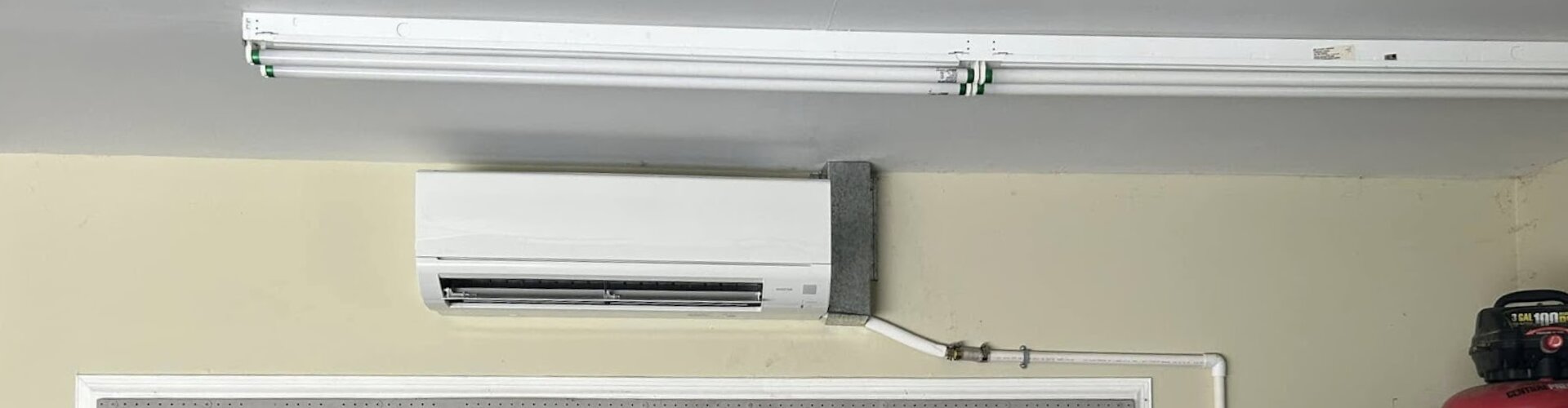
What this work looks like done right
Most light commercial buildings run dumber than they should: thermostats set by whoever complained last, equipment conditioning empty rooms all weekend, and no record of any of it. Modern controls fix that at surprisingly low cost, and the payback in a Florida cooling budget is quick arithmetic.
The practical tier for this market is smart commercial thermostats and light automation: schedules that follow actual operating hours, remote visibility from the owner’s phone, lockouts that end the thermostat wars, alerts when a unit misbehaves, and multi-location dashboards for operators who cannot be everywhere. Bigger buildings step up to fuller control systems, scoped honestly.
Setup discipline decides the outcome: equipment staging configured correctly, schedules built from real hours, alerts tuned so they get read instead of ignored, and the handoff done in plain words. The building should serve the business quietly, and the controls exist to make that true.
- Smart commercial thermostats and scheduling
- Remote visibility and control for owners
- Lockouts that end thermostat wars
- Fault alerts before customers notice
- Multi-location dashboards for operators
- Honest scoping, no overbuilt control projects
Three steps, no surprises
Map hours and habits
How the building actually operates, where the waste and the complaints live.
Configure the controls
Staging, schedules, lockouts and alerts set up properly, per zone and unit.
Hand off in plain words
The owner runs it from a phone, and the building stops needing babysitting.
Related work we handle
Every service carries the same 100% satisfaction guarantee, the same 24/7 phone, and the same rule about telling you the price before the work. The complete list lives on the services page. See finished jobs in the work gallery, or read what customers say on the reviews page.
Get a Straight PriceWhy this work is different in Florida
Summer storms are the stress test nobody schedules. Lightning within a mile puts spikes on the line, brief outages slam compressors that were mid-cycle, and wind-driven rain finds every gap in an aging disconnect box. It is no coincidence the phone rings hardest the morning after a big storm cell rolls through. The systems that survive those nights tend to be the maintained ones: tight connections, healthy capacitors, drains that were not already half-clogged. That is the honest sales pitch for maintenance, and it is the reason maintenance customers hold the front of the line when the after-storm rush hits.
How pricing works
Pricing here works one way: you hear the number before the work happens. Service calls get quoted when you book. Repairs get diagnosed, then priced, then approved by you before a wrench turns. Replacements come as two or three clear options with honest operating cost differences, not a single take-it-or-leave-it figure engineered around a commission. The word customers keep using in reviews is honest, and that is the entire strategy: an owner-run company in a small market lives or dies on whether the last customer would call again, so every price has to survive being repeated to your neighbor.
The owner-run difference
Owner-run means something specific here. The person who answers the midnight call, quotes the price and stands behind the guarantee is the same person whose name is on the truck. There is no call center reading a script, no commissioned closer arriving after the technician softens you up, and no corporate playbook that treats a repair visit as a sales lead. Twenty years of hands-on work set the standard; four years of running the company on referrals have proven it pays.
Brands, parts and honest recommendations
On the equipment side, Rheem and Trane are the factory relationships, which means preferred access to units, parts and technical support when your job needs them. On the repair side, brand loyalty means nothing: Carrier, Goodman, Lennox, Daikin, York, Ruud, Amana and the rest of what Florida installs are everyday work, and regional parts availability for all of them keeps repair turnarounds short. The recommendation you get is driven by what fits the house and the budget, never by whatever box a distributor wants moved this month.
Before the truck arrives
Want the visit to go faster? Three things help. First, note what the system is doing and when it started: sounds, smells, warm air, water where it should not be. Second, check the breaker panel and the filter before calling, because a tripped breaker or a suffocated filter solves a surprising share of calls on the phone, free. Third, clear a path to the equipment, indoor and out. None of it is required, but customers who do it tend to have their answer, and their cool air, sooner.
Questions we hear about this
Straight answers about building automation systems from the crew that does it every week. If your question is not here, call 561-339-5729 for a direct answer, day or night.
What does automation save a small building?
Cooling to empty rooms is the classic commercial waste, and schedules alone typically claw back a meaningful slice of the bill. Add remote visibility and faults get caught days earlier. The math for your building gets shown before anything is installed.
Can I control multiple locations from one screen?
Yes, that is one of the strongest cases: every site’s temperature, schedule and alerts on one dashboard, with local tampering locked out. Operators with three storefronts stop driving between thermostats.
Do I need a full building management system?
At light commercial scale, usually not, and it will not be oversold here. Smart thermostats with proper setup deliver most of the value at a fraction of the cost. Buildings that genuinely earn the fuller tier get told exactly why.
Will staff be able to mess with the settings?
Only within the limits you choose. Lockouts and ranges keep the space comfortable while ending the quiet war over the dial, which by itself pays for the hardware in some buildings.
What happens when a unit starts failing?
The system flags it, you and we both can see it, and the repair happens before the dining room notices. Catching a failing unit at the first alert instead of the first complaint is the entire point of visibility.
Ready when you are
Building Automation Systems handled by an owner-run crew that answers its phone. Okeechobee to the coast, 24 hours a day.
Schedule a Visit