
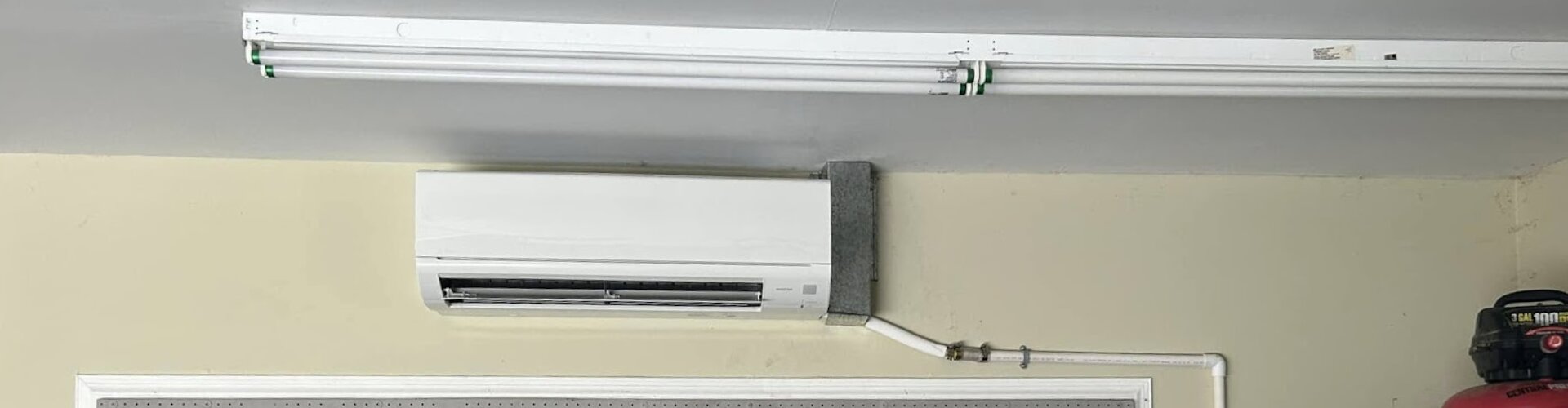
What this work looks like done right
A maintenance contract should be the most boring document a business signs: visits on a schedule, work defined plainly, a price that means what it says, and records that prove it happened. The industry has buried that simple promise under tiered gotchas and auto-renewing fine print, and this contract is the rebellion: plain English, plain terms.
The coverage is the real thing, not a filter-change theater: full measured service per unit each visit, coils, charge, electrical under load, drainage, belts and controls, documented with readings that build each unit’s history. Restaurants, storefronts, offices and property portfolios each get a schedule matched to their duty cycle.
The contract pays where businesses feel it: priority response when something fails anyway, fewer failures to respond to, equipment that lasts years longer under Florida duty, and capital planning built on documented trends instead of surprise. And it cancels anytime, because it is designed to be worth keeping, not impossible to leave.

- Plain-English terms, no gotcha tiers
- Full measured service, documented per unit
- Schedules matched to real duty cycles
- Priority response written into the deal
- Trend data for honest capital planning
- Cancel anytime, it earns its keep or it goes
Three steps, no surprises
Scope the equipment
Every unit inventoried and baselined, the schedule matched to its duty.
Run the contract
Measured visits on calendar, records delivered, reminders on us.
Reap the quiet
Fewer emergencies, longer equipment life, and budgets that see ahead.
Related work we handle
Need something this page does not cover? The full lineup is on the services page, from ductwork to refrigeration. Photos of real installs and repairs sit in the work gallery, and the reviews page collects what customers have said about Brian and the work.
Get a Straight PriceWhy this work is different in Florida
Equipment does not age the same way everywhere. Here an air conditioner works close to year-round in humid air and takes a beating every storm season, so the gap between a cared-for system and a neglected one is enormous. The cared-for one can run a dozen years or more. The neglected one starts asking for expensive parts years early, usually one at a time, until the owner is weighing a repair bill against a replacement in the middle of July. Regular service will not make a system last forever. What it does is let you plan the replacement on your own schedule instead of the weather’s.
How pricing works
Plenty of customers learn how pricing works here the same way: Brian points them to the less expensive repair or unit because it made more sense for their situation, and their reviews say so in plain words. If a repair buys you several good years, you hear that before anyone mentions a new system. If replacement is the smarter money, you get two or three options with the operating cost differences laid out, and you pick. Whichever way it goes, the number comes before the work starts, and nothing gets added after you agree to it.
The owner-run difference
Here is what owner-run looks like in practice. Customers have written about Brian diagnosing their problem over the phone before he arrived, and about him working in the dark to get a family’s air running the same night. That kind of thing rarely happens at a company where the person on the phone has never seen the equipment. Here, the owner takes the call, does the work and answers for the result. Twenty years of experience back it up, and four years of referrals say it keeps working.
Brands, parts and honest recommendations
Plenty of houses out here have a mix: an air handler from one brand, a condenser from another, a thermostat from a third. For repair work that is everyday stuff. Carrier, Goodman, Lennox, Daikin, York, Ruud and Amana parts are available regionally, so turnarounds stay short. When a replacement does make sense, the options usually start with Rheem and Trane, the two factory relationships, and you can ask for another major brand to be quoted. The choice comes down to the house and the budget.
Before the truck arrives
A few minutes of homework before the visit pays off. Look at the thermostat: confirm it is set to cool, the setting sits below room temperature, and the screen is not blank from dead batteries. Glance at the outdoor unit to see whether the fan is spinning. Mention any recent storm or power blink when you call, since that narrows the list fast. If water is pooling near the indoor unit, put a towel down and tell us. Small details like these often point straight at the problem before the truck pulls in.
Questions we hear about this
Straight answers about preventative maintenance contracts from the crew that does it every week. If your question is not here, call 561-339-5729 for a direct answer, day or night.
What makes this contract different?
You can read it in one sitting and nothing in it is a trap: defined work, defined schedule, defined price, cancel anytime. The industry standard is fine print engineered for auto-renewal; this is engineered for renewal by merit.
What exactly is included per visit?
The full measured service: coil cleaning, charge verification, electrical measured under load, condensate, belts and controls, per unit, with readings recorded and delivered. If something is found failing, you get a straight price and a recommendation, never a surprise invoice.
How is pricing structured?
Per unit, per visit frequency, stated up front and held. Duty cycle sets the frequency: a restaurant rooftop earns more visits than an office split. No percentage-of-savings games, no mystery escalators.
Does the contract cover repairs too?
Repairs are quoted separately with contract-customer priority and the same price-before-work rule. Bundled repair coverage tends to hide its cost in the premium; keeping it separate keeps both sides honest and the contract cheap.
Can a property manager put a whole portfolio on one contract?
That is the cleanest version of it: every property inventoried, one schedule, per-unit records, tenant coordination handled, one point of contact. It is how several managers around the lake already run.
Ready when you are
Preventative Maintenance Contracts handled by an owner-run crew that answers its phone. Okeechobee to the coast, 24 hours a day.
Schedule a Visit