
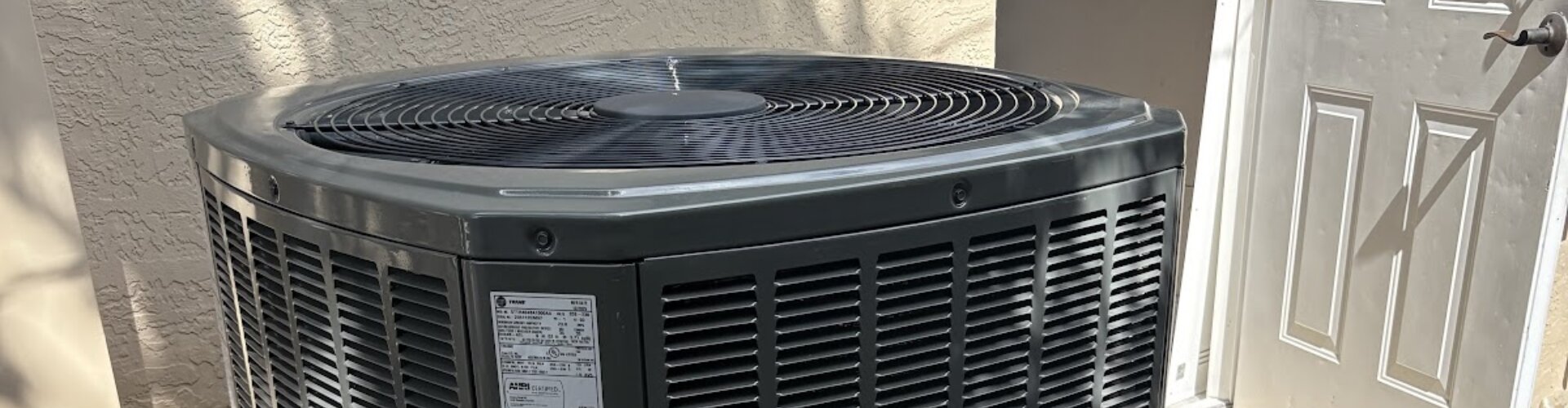
What this work looks like done right
Every air conditioner reaches the year where fixing it stops making sense. In Florida that day arrives early: the run hours are brutal, the humidity works the coils, and lightning season punishes weak electronics. The replacement conversation here starts with math, whether the next repair is worth it on a system of that age, and ends with your decision, made without pressure.
Brian has told plenty of customers to keep their old system and repair it, and the reviews say so. When replacement genuinely wins, you get two or three configurations with straight prices, realistic operating cost differences, and an honest read on which one earns its keep for the years you plan to stay.
The old unit comes out clean and gets disposed of properly. The new one goes in commissioned by the numbers: pressure test, deep vacuum, factory-spec charge, airflow verified. The 100% satisfaction guarantee applies from day one.

- Repair-or-replace math laid out plainly
- Straight prices on two or three real options
- Rheem and Trane systems installed most often
- Old equipment removed and disposed of properly
- Full commissioning with the numbers shown
- Permits and inspections included, always
Three steps, no surprises
Get the honest read
Age, refrigerant type, failure history and the repair quote all go into a plain recommendation.
Choose without pressure
Options priced straight, differences explained, decision yours. Nobody follows up like a car lot.
Swap and verify
One-day changeout in most homes, commissioned to spec, guaranteed in writing.
Related work we handle
Need something this page does not cover? The full lineup is on the services page, from ductwork to refrigeration. Photos of real installs and repairs sit in the work gallery, and the reviews page collects what customers have said about Brian and the work.
Get a Straight PriceWhy this work is different in Florida
Equipment does not age the same way everywhere. Here an air conditioner works close to year-round in humid air and takes a beating every storm season, so the gap between a cared-for system and a neglected one is enormous. The cared-for one can run a dozen years or more. The neglected one starts asking for expensive parts years early, usually one at a time, until the owner is weighing a repair bill against a replacement in the middle of July. Regular service will not make a system last forever. What it does is let you plan the replacement on your own schedule instead of the weather’s.
How pricing works
Plenty of customers learn how pricing works here the same way: Brian points them to the less expensive repair or unit because it made more sense for their situation, and their reviews say so in plain words. If a repair buys you several good years, you hear that before anyone mentions a new system. If replacement is the smarter money, you get two or three options with the operating cost differences laid out, and you pick. Whichever way it goes, the number comes before the work starts, and nothing gets added after you agree to it.
The owner-run difference
Nobody on this job earns a bonus for selling you a bigger system or a service plan you did not ask for. The person quoting the work is the person who owns the company, and the decision stays with you. Reviewers describe Brian as very professional and honest, and a few mention being sold the cheaper option because it made more sense for their situation. Twenty years of experience built that habit. Four years of keeping the company going on referrals keep it in place.
Brands, parts and honest recommendations
Being a Rheem and Trane partner brings factory support and quick access to their units and parts. It does not decide what goes in your house. If the system you already own is a Goodman or a Lennox with good years left, the advice is to repair it. If a modest unit fits the load better than a premium one, that is the one you hear about first. Customers have written that they were sold the less expensive option because it made more sense for them. That is how an equipment relationship ought to work.
Before the truck arrives
A few minutes of homework before the visit pays off. Look at the thermostat: confirm it is set to cool, the setting sits below room temperature, and the screen is not blank from dead batteries. Glance at the outdoor unit to see whether the fan is spinning. Mention any recent storm or power blink when you call, since that narrows the list fast. If water is pooling near the indoor unit, put a towel down and tell us. Small details like these often point straight at the problem before the truck pulls in.
Questions we hear about this
Straight answers about ac replacement from the crew that does it every week. If your question is not here, call 561-339-5729 for a direct answer, day or night.
How do I know it is time to replace?
When repairs start repeating, the system runs on borrowed refrigerant, or the unit is past twelve to fifteen Florida years, replacement usually wins. You get the specific math for your system, not a rule of thumb bent toward a sale.
Can I replace just the outside unit?
Usually a bad idea. Coils are matched sets, and modern refrigerants and efficiency standards mean a mismatched pair runs poorly and can void warranties. Sometimes a partial swap is legitimate, and if it is, you will hear it from us.
How long does replacement take?
Most are done in one day. The house does not sit without cooling overnight in summer, and the schedule gets set around that promise.
Will a new system really lower my bills?
Cooling is the biggest slice of a Florida power bill, so stepping up from old equipment usually shows up on the statement. You get a realistic range for your house, not a brochure number.
What happens to the old unit?
It leaves with us. Refrigerant gets recovered legally, the metal gets recycled, and nothing sits at your curb.
Ready when you are
AC Replacement handled by an owner-run crew that answers its phone. Okeechobee to the coast, 24 hours a day.
Schedule a Visit