
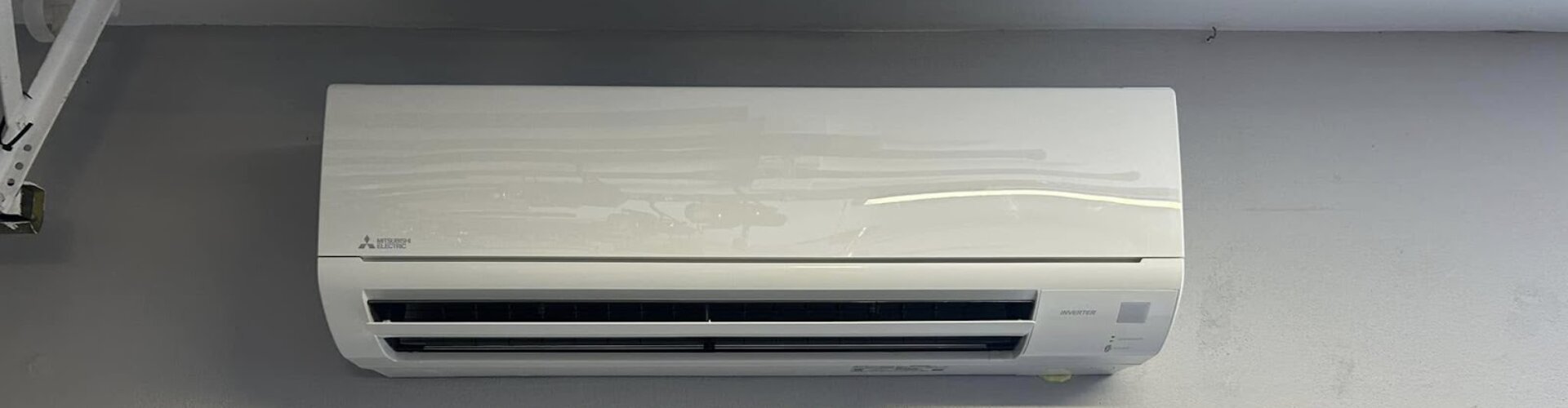
What this work looks like done right
Some spaces never got ductwork and never will: the garage workshop, the converted lanai, the addition the last owner built, the back bedroom that runs five degrees hot. A ductless mini-split conditions exactly that space, at high efficiency, without tearing the house open for duct runs.
Installation quality decides everything with mini-splits. The line set has to be flared right, the vacuum pulled deep, the condensate routed where Florida humidity cannot turn it into a wall stain, and the head placed where the air actually throws. We install single-zone units and multi-head systems that can condition a whole older home.
Sizing matters as much as placement. An oversized head short-cycles and leaves the room damp; an undersized one runs flat out and dies young. The room gets measured, the load gets figured, and the equipment gets matched to the actual space, with the price stated before the work begins.

- Single-zone installs for garages and additions
- Multi-head systems for whole-home zoning
- Proper flares, deep vacuum, factory-spec charge
- Condensate routed to survive Florida humidity
- All major mini-split brands installed
- Straight prices before scheduling, always
Three steps, no surprises
Size the space
Room dimensions, sun load and how the space gets used set the equipment size.
Place it right
Head location picked for air throw and drainage, line set routed clean and short.
Commission by the numbers
Vacuum verified, charge weighed in, heating and cooling modes both proven before sign-off.
Related work we handle
Want to see the work before you call? The gallery has photos from real jobs, and the reviews page has customers describing how those jobs went. Everything we do is listed on the services page, residential and commercial, all backed by the same guarantee and a phone that is answered day and night.
Get a Straight PriceWhy this work is different in Florida
Homes near the coast deal with one more opponent, and it is salt. It rides in on the breeze, settles on condenser fins and starts eating aluminum and copper the day the unit is set. Fins flake, coils pit, and the electrical terminals in the outdoor cabinet corrode until a connection fails. Inland, the same unit takes fertilizer, sand and grass clippings blasted into the coil by the mower. Either way, the outdoor half of the system lives a hard life. Rinsing the coil properly and checking every connection in that cabinet buys years, and it costs far less than a new condenser.
How pricing works
Replacement is where most pricing games get played in this trade, so it is where we keep things plainest. You get two or three options side by side: what each one costs to install, what it should cost to run through a long summer, and why one fits your house better than the others. Sometimes the right answer is the modest unit, and you will hear that. There is no salesman on commission shaping the menu and no pressure to sign tonight. Take the options home, compare them, call with questions. What you approve is what shows up on the invoice.
The owner-run difference
Nobody on this job earns a bonus for selling you a bigger system or a service plan you did not ask for. The person quoting the work is the person who owns the company, and the decision stays with you. Reviewers describe Brian as very professional and honest, and a few mention being sold the cheaper option because it made more sense for their situation. Twenty years of experience built that habit. Four years of keeping the company going on referrals keep it in place.
Brands, parts and honest recommendations
Plenty of houses out here have a mix: an air handler from one brand, a condenser from another, a thermostat from a third. For repair work that is everyday stuff. Carrier, Goodman, Lennox, Daikin, York, Ruud and Amana parts are available regionally, so turnarounds stay short. When a replacement does make sense, the options usually start with Rheem and Trane, the two factory relationships, and you can ask for another major brand to be quoted. The choice comes down to the house and the budget.
Before the truck arrives
A word on what not to do while you wait. Do not keep resetting a breaker that trips again; that is the system telling you something. Do not chip ice off a frozen coil; switch the system to fan only and let it thaw. Do not pour anything down the drain line. What does help: swapping out a filled-up filter, clearing room around the equipment, and noting what you saw and heard. Those few steps keep a small problem from growing and give the technician a clean start.
Questions we hear about this
Straight answers about ductless mini-split installation from the crew that does it every week. If your question is not here, call 561-339-5729 for a direct answer, day or night.
What does a mini-split cost to run?
Less than you expect. Inverter-driven mini-splits are the most efficient cooling most homes can buy, and conditioning one room beats dropping the whole house two degrees to fix one hot space. You will get realistic operating numbers for your situation.
Do mini-splits heat too?
Yes. Every unit we install is a heat pump, so the same head that cools the garage in August warms it on the January mornings Florida pretends it is winter.
One big unit or several heads?
Depends on the layout. Two singles sometimes beat one multi-head on both cost and redundancy; sometimes the multi wins clean. You get both configurations priced straight so the trade-off is visible.
Can a mini-split handle a Florida garage?
That is one of its best jobs here, with two caveats: the unit must be sized for an uninsulated space, and the door seals matter. We size for the garage as it actually is, and tell you plainly if insulation should come first.
Will the wall unit be loud?
No. Modern heads run quieter than a refrigerator. The compressor sits outside, and proper installation keeps vibration out of the wall.
Ready when you are
Ductless Mini-Split Installation handled by an owner-run crew that answers its phone. Okeechobee to the coast, 24 hours a day.
Schedule a Visit