
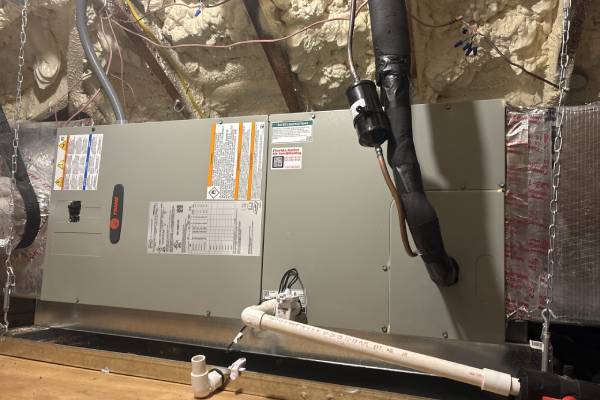
Naming the fault is the whole job
This page is about finding out. If you already know what is broken and want it fixed, the page you want is AC repair in Taylor Creek. What lands here are the calls where nobody can say what is wrong yet: the system that quits and comes back before anyone can look at it, the house that holds its setting and still feels like a wet towel, the bill that climbed while the family did nothing different.
Every one of those complaints has several possible causes that look identical from the doorway. You tell them apart with numbers, taken while the system runs, in the conditions that make it misbehave. The visit produces a named cause and the evidence behind it, and then you decide what to do about it. The alternative is what brings people to us in the first place: buying parts one at a time until something works. That gets expensive well before it gets lucky.

- Faults that hide when the truck pulls up
- Damp rooms in a house that hits its setting
- Bills that climbed with no other change
- Older waterfront systems nobody has records for
- Corroded connections out near the creek
- Second reads before you buy new equipment
Numbers that tell two causes apart
Four groups of readings, all taken with the system running the way it runs for you rather than idling for our convenience. None of them is interesting on its own.
Temperature across the coil
How much heat the system pulls out of the air passing through it. A small split points at airflow or charge. A large one with warm rooms anyway points at the ducts.
Pressure on both sides
What the refrigerant circuit does under load. Read against the outdoor temperature, this separates a low charge from a restriction from a tired compressor.
Static pressure and airflow
What the blower is fighting and what each run delivers. The reading most often skipped, and the one that catches undersized returns and crushed flex duct.
Electrical draw under load
What each motor and control pulls while working. Weak parts read fine cold and fail hot, so the number that matters comes at the worst hour of the day.
What sitting beside the water does to the evidence
Taylor Creek sits on the water east of town where the creek meets Lake Okeechobee, and the humidity off that lake never lets up. That shapes the diagnosis in two specific ways, and both of them mislead people who are trying to solve it themselves.
The first is water. A coil in this air sheds it all day, and that water leaves through a narrow line that slimes shut without much encouragement. When it backs up, a safety switch shuts the system down on purpose. What the homeowner sees is equipment that died for no reason and healed itself by evening, which describes an expensive electrical fault and a clogged drain line equally well. The readings say which.
The second is corrosion. Damp air works on the small electrical parts first: contact points, terminals, the connections nobody inspects because they are not really components. Those failures are heat sensitive, so the system behaves flawlessly at nine in the morning and quits at four. Anyone who visits in the morning finds nothing wrong, which is why the timing of the visit is part of the method rather than a scheduling detail.
The fish camps and the older houses
Plenty of what runs out here has been running a long time, sometimes with no paperwork and no record of what a previous owner changed. Readings do not care whether anyone kept the manual. Age changes the conversation only at the end, when the honest answer is sometimes that the repair is sound and sometimes that it is money thrown at a system near the end of its life.
When the answer is the ductwork
Often enough the equipment measures healthy and the delivery is the problem. Then the finding points at duct work in Taylor Creek rather than the unit outside, and we say so even though it is the smaller job.
It hits the setting and still feels wet
This is the finding customers push back on hardest, because on paper nothing is broken. The thermostat is satisfied, the air coming out is cold, and the house still feels heavy.
Usually the system has more capacity than the house needs. It reaches the temperature quickly, shuts off, and never runs long enough to pull much water out of the air. Cooling and drying are two different jobs, and a system that finishes the first too fast never really starts the second. The fixes live in runtime rather than in parts: fan settings, a thermostat that watches humidity instead of only temperature, corrections to returns and duct, and sizing to the real load whenever the system is replaced.
Asking for a second read
If somebody has told you the system needs replacing, another set of eyes is reasonable and nobody worth hiring takes offense. The useful question is what was measured, not what was observed. A recommendation with readings behind it holds up under a second look, and plenty of them do.
What you walk away with
The cause in plain language, the readings that prove it, and the price to fix it, all said before anything is taken apart. If you want to sit with it for a week, that is a normal thing to do.
History first, then readings
It starts with talking rather than with tools: what the system does, when it started, what weather or time of day brings it on, and what has already been replaced by somebody else. That conversation usually cuts the list of suspects in half before anyone opens a panel.
Then the system runs and the readings get collected, scheduled for the hour the problem shows itself when that is the pattern. Then you get the answer and the price, and the decision is yours. Every job in Taylor Creek carries the same 100% satisfaction guarantee and the same 24/7 phone as the rest of the coverage map, because the business runs on referrals from neighbors rather than on advertising.
What to have ready when you call
Four things make the phone call worth more than it usually is. When the trouble started, and whether it arrived suddenly or crept up over a season. What time of day it happens, because a fault that only appears after lunch is already a different suspect list than one that is there at breakfast. Which rooms are wrong, since one warm room and a whole warm house point in opposite directions. And what has already been replaced, by us or by anybody else, so the same part does not get suspected twice.
Two more things help if you have them. A photo of the label on the outdoor unit gives us the model and the age before the truck loads. And if the fault is the kind that disappears when someone shows up, a short phone video of it happening is worth more than an hour of waiting for it to repeat.
Related work nearby
Start from the Taylor Creek page for everything we cover here, see finished work in the job gallery, or widen out to Okeechobee County and the full service areas map.
Get a Straight PriceWhat Taylor Creek customers ask us
Answers from the person who runs these visits. If yours is not here, call 561-339-5729 and ask, day or night.
Why book a diagnostic instead of just having it repaired?
Because the complaint almost never names the cause. Several faults produce the same warm house, and telling them apart by feel means buying parts until one happens to be right. Measuring first is usually the cheaper path.
It quits and then works again before anyone can look at it. What is that?
In this much humidity it is most often a clogged condensate drain backing up into a float switch, which shuts the system off on purpose and lets it restart once the water drains. Heat sensitive electrical parts behave the same way on hot afternoons. Both are findable, and neither is usually a large repair.
The house cools fine but the air feels heavy. Is something broken?
Frequently nothing is. A system with more capacity than the house needs reaches the temperature in short bursts and never runs long enough to pull the moisture out. The fix is usually runtime and settings rather than a part, and sizing to the real load whenever the system is eventually replaced.
The unit is old and nobody kept the paperwork. Can you still diagnose it?
Yes. Readings taken on the running system do not depend on records or on knowing what a previous owner changed. Age only matters at the end of the visit, when we tell you honestly whether the repair is worth doing on equipment that far along.
Can you take a second look at another company’s recommendation?
Yes, and asking for one is reasonable. Bring us whatever readings they gave you, or none if they gave you none, which is itself worth knowing. We measure independently and say plainly whether the first recommendation holds up, and often enough it does.
Get the answer first
Owner-run diagnostics for Taylor Creek, with the phone answered around the clock. Book it on the contact page or call and describe what it is doing.
Schedule a Visit