
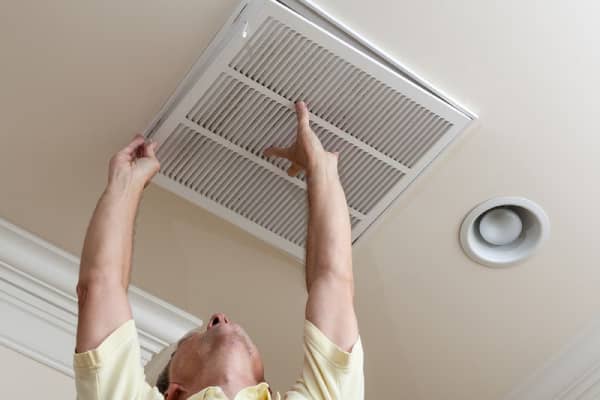
Plenty of ducts do not need this
Duct cleaning gets sold harder than almost anything else in this trade. A lot of Port St. Lucie homeowners have opened a mailer with a whole-house price printed on it before anyone has looked inside a single vent. So here is the honest version. On a house where the filter gets changed, the system runs dry and the returns are sealed, dragging a brush through the supply runs changes very little. We will say that out loud at your door and charge you nothing for the look.
The real cases are not rare here, though. Debris you can see sitting in a boot. Droppings, nesting material or insect activity in an attic run. Construction dust after a remodel, which is the worst of the bunch, because drywall powder travels everywhere and stays. And a system that has run with no filter at all, or with the filter rack bypassed, which pulls attic air and loose fiberglass straight into the blower.
- Debris visible at a supply boot
- Rodent or insect evidence in attic runs
- Drywall dust after a remodel
- A filter rack that has been bypassed
- Musty air the first minutes of every cycle
- A return chase drawing unfiltered attic air
Have someone look first
An owner-run crew that answers its own phone, day or night, and will tell you when the job is not worth doing.
Schedule a VisitWhere the moisture actually collects
A dry-climate duct system and a Port St. Lucie duct system are two different animals. Nearly every house here is slab on grade with the duct laid in an unconditioned attic, and that attic bakes while the humidity runs hard nine months a year. Cold supply air moving through hot damp space means condensation anywhere insulation is thin, crushed or torn open.
What that produces is growth on the wet side of the system first: the evaporator coil, the drain pan, and the plenum right off the air handler. That is where the smell comes from when someone tells us the house smells like a locker room for the first ten minutes of every cycle. Scrubbing the branch runs and skipping the coil is theatre. Whether any of it matters to your breathing is a question for your doctor. What we can tell you is what came out and what did not.
Look before quoting
Filter out, air handler open, plenum and the first runs inspected, photos of your system on your phone. If it is clean, that is the report you get.
Contain the house
Registers covered, the system pulled under negative pressure, so what comes loose leaves the building instead of landing in your living room.
Wet side, then the runs
Coil, pan and plenum cleaned by hand, blower wheel pulled if the vanes are loaded, then the branches and boots.
Reassemble and verify
Fresh filter, drain line flushed, access doors sealed back up, system run and airflow checked before we load the truck.
Offers worth walking away from
A whole-house price quoted over the phone before anyone has seen your attic is a guess dressed up as a deal. So are the photos of black fuzzy duct that appear on a tablet with no timestamp and no shot of your own address on the job. Ask to see your system, before and after, on your phone. Anyone doing real work hands it over gladly.
The other thing worth knowing: cleaning is sometimes the wrong job entirely. In older neighborhoods off Prima Vista and Airoso we find boots pulled loose from the ceiling, torn flex lying in insulation, and return chases drawing attic air through a gap in drywall. Cleaning that system just fills it again by August. Repairing or replacing the bad sections is the fix, and we will tell you so instead of selling you the easy service.
Related work in Port St. Lucie
St. Lucie County calls run on the same rules as everywhere we work: the 100% satisfaction guarantee, a phone answered at any hour, and the price said out loud before the work starts. See finished jobs in the work gallery, browse everything we do on the services page, or read the rest of our Port St. Lucie coverage.
Get a Straight PriceQuestions Port St. Lucie customers ask
Plain answers from the crew that opens these systems every week. If yours is not covered, call 561-339-5729 and ask, day or night.
How do I know if my ducts really need it?
Someone has to look. We pull the filter, open the air handler and inspect the plenum and first runs, then show you the photos. Visible debris, droppings, remodel dust or a bypassed filter means yes. A clean, dry, sealed system usually means no, and we will say so.
Why does the coil matter more than the duct runs?
The coil is the wet part. In this climate it stays damp for long stretches, and so do the pan and the plenum right behind it. That is where growth and odor start. A cleaning that brushes the branches and never touches the coil leaves the source in place.
What are the warning signs of a bad offer?
A flat whole-house number quoted before anyone has been in your attic, scare photos with no timestamp and no proof they came from your address, and a push toward add-on treatments. Ask for before and after shots of your own system. That request sorts the field quickly.
Will this get rid of the musty smell for good?
It depends on why the smell exists. If it is a loaded coil or standing water in the pan, cleaning and clearing the drain usually ends it. If humid attic air is being pulled in through a torn return, the smell comes back until that leak is repaired.
How long does it take and what happens after?
Most homes take a few hours, sometimes a full day on a big Tradition-area house with a long run list. Expect some noise and covered registers while we work. Afterward you get a fresh filter, a cleared drain line, photos of the work, and airflow checked before we leave.