
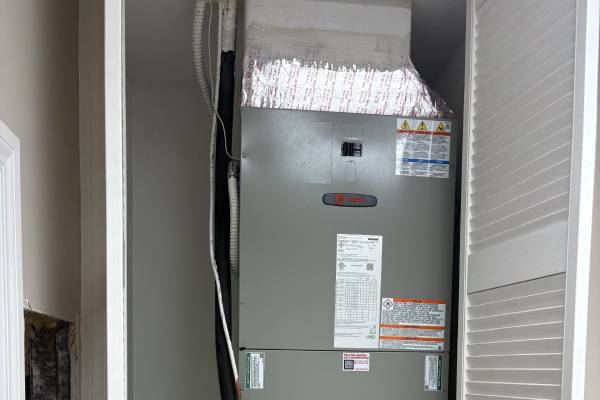
Dry the house out before anything else
Ask most people what indoor air quality means and they picture a purifier humming in the corner of a bedroom. In a house near Okeechobee the first question is plainer: how wet is the air inside, and where is the water collecting? The air conditioner is the biggest dehumidifier most homes own. When it is oversized, short cycling, or moving air across a coil that never gets cold enough, it drops the temperature without wringing the water out. The thermostat reads fine while the couch cushions feel damp.
That leftover moisture feeds nearly every complaint that comes in under this heading. It shows up as black specks on the supply grilles, a sour smell for the first few minutes after the blower kicks on, dust that clings because it is slightly sticky, and allergies that ease off the moment the family leaves town for a weekend. A gadget clipped into the ductwork does very little for any of those while the coil, the drain and the humidity stay exactly where they were.
So the visit opens with readings. Humidity and temperature in a few rooms and at the return, the drop across the indoor coil, how long the system runs each cycle, and whether it ever runs long enough to dry anything. Those numbers decide the rest of the conversation.
- Indoor humidity read room by room
- Coil, drain pan and condensate line inspected
- Air handler closet and return path checked for leaks
- Filter sized to what the blower can push
- Run times and airflow measured under load
- Findings explained before anything is offered
The broader list of air quality work is on the indoor air quality page, and pictures from finished jobs are in the gallery.
Where that musty smell usually hides
When the vents smell like a towel left in a gym bag, the cause is almost always within a few feet of the air handler. Three spots account for most of what turns up.
A pan that holds water
The pan under the indoor coil should empty as fast as it fills. When the line slows with algae, or the pan sits slightly out of level, water stands there all summer and the blower drags air across that puddle on its way to every room. A float switch that shuts the system down is the lucky version. The unlucky one is a slow leak into a closet floor nobody looks at for months.
A coil wearing a coat
The indoor coil stays cold and wet most of the year here. Dust that slips past a loose or wrong filter sticks to that wet surface and turns into a mat that holds moisture and smells. It also blocks airflow, so the system runs longer and dries the house worse. A proper coil cleaning is often the single biggest improvement a house gets.
A closet breathing the wrong air
Plenty of homes put the air handler in a hall closet, a utility room or a garage corner. If the return pulls from that space and the space is damp or shares a wall with the washer, the system spreads whatever is in there. Gaps around the cabinet and platform are common, and sealing them costs very little.
Four more jobs on the Cypress Quarters list
Heat pumps that do the cooling for most of the year and carry the house through the handful of cold mornings.
Electric pool heaters for owners who want the water warm enough to use well past the summer.
Refrigeration for walk-ins, reach-ins and specialty cooling that cannot sit until morning.
New construction HVAC, laid out from a load calculation while the framing is still open, which is also the cheapest moment to design good air into a house.
For the town itself, start with the Cypress Quarters page. Neighboring communities are listed on the Okeechobee County page, and every town on the route is under service areas.
Get a Straight PriceA thicker filter can choke the blower
The filter aisle sells the idea that a denser filter is always the healthier choice. Whether it is depends on the blower and the return it sits in. A residential blower is built to move a certain amount of air against a certain amount of resistance. Drop a dense pleated filter into a return grille sized for a thin fiberglass one and the resistance climbs. Airflow across the coil falls, the coil runs colder, and in a humid house that can mean a frozen coil, water dripping where it should not, and a blower motor straining every hour it runs.
The fix is matching the filter to the system. Sometimes that means a better filter than the one in there now. Sometimes it means a deeper media cabinet with more surface area, so the house gets finer filtration without strangling the blower. And sometimes the filter is fine and the real problem is a return that leaks around it, pulling unfiltered air from the attic or the wall cavity. A static pressure reading settles the question in a few minutes, and it costs a lot less than a blower motor.
What you can check on your own
A lot of air quality complaints can be narrowed down before anyone drives over. Pull the filter and look at it, along with the date if you wrote one on the frame. Check the edges of the return grille for gray fuzz, which means air is slipping around the filter instead of through it. If the air handler lives in a closet, see whether the door is louvered or solid and whether boxes are stacked against the return. Then find the condensate line where it leaves the house and watch for a steady drip during a long run cycle. Pour nothing into it, and mention what you found when you call.
Saying no to the gadget when it will not help
Air quality is the corner of this trade with the most products and the least testing. UV lights, ionizers, purifier cartridges and branded filters get sold into houses where the real trouble is a clogged drain or a system two sizes too big. Brian measures and looks first, and when a purifier or a UV light will not fix the complaint you described, he tells you so standing in your hallway. People who have hired him call him honest in their reviews, and some write that he steered them to the cheaper option because it fit better. That habit gets tested here more than anywhere.
When the house does need more, the options get laid out in plain terms. A whole-house dehumidifier ties into the ductwork and pulls water out on the days the air conditioner barely runs, which is exactly when moisture builds: mild spring and fall weather, long rainy stretches, a house shut up while the owners are away. A fresh-air setup brings in measured outside air for homes sealed so tightly they turn stuffy, and around here it has to be paired with dehumidification or it simply imports humidity. UV light earns its place on some coils that keep growing film between cleanings. Each option comes with what it costs to run and what it will not do.
Equipment already in the house
Testing and cleaning work the same on any brand, and an older system with good years left gets kept, with the air quality work built around it.
Air quality questions from the phone line
Short answers about musty vents, filters and humidity. If yours is not here, call 561-339-5729 at any hour and describe what the house is doing.
Why do my vents smell musty when the AC first turns on?
Most of the time it is standing water or growth close to the air handler: a drain pan holding water, a dirty indoor coil, or a damp closet the return is pulling from. The blower pushes that smell through the house for the first few minutes of every cycle.
Will an air purifier fix the smell?
Usually not by itself. A purifier treats the air that passes through it while the source keeps producing more. Clean the coil, clear the drain and bring the humidity down first. If a complaint remains after that, a purifier may be worth discussing, and you will get an honest answer either way.
Which filter should I buy?
The one your blower and return grille can handle. A dense pleated filter in a return built for a thin one can starve airflow and freeze the coil. A quick static pressure reading shows how much filter the system can take, and sometimes a deeper media cabinet is the better route.
How humid should the inside of my house be?
Dry enough that mold struggles, which on an inexpensive hygrometer means staying below 60 percent through the summer. If yours sits higher while the AC runs normally, the system is cooling the air without drying it, and that is worth having someone look at.
Do you test before recommending equipment?
Every time. Humidity, temperatures across the coil, static pressure and a look at the drain and the closet come first. Equipment only enters the conversation when those readings show a problem that cleaning, sealing or a filter change will not solve, and the cheaper fix comes up first when it works.
Tell Brian what the house smells like
Owner-run air quality work for Cypress Quarters homes and rentals, starting with the moisture, with a phone that rings through day and night.
Send Brian the Job