
The walk-in that drifts warm by morning
This call usually comes early. Someone opens the walk-in to start the day and the thermometer reads several degrees above where it sat at close. Nothing is loud, nothing is obviously broken, and the box is still cooling, only not enough. That slow drift is one of the most common refrigeration complaints there is, and it nearly always has a cause you can put a finger on.
Start with the door. A gasket that has torn or flattened, a hinge that sagged until the door no longer seals, or a door left cracked on the last trip in lets warm, humid air pour into the box all night. That moisture freezes onto the evaporator coil, the coil ices over, airflow drops, and the box warms up even though the system never stopped running. Then there is the condensing unit outside, fighting heat and dust. A dirty condenser coil cannot get rid of heat, pressures climb, and capacity falls off on exactly the hottest days, when staff are opening the door most.
Each of those is a different repair, and guessing between them costs product.
While you wait for the truck
Keep the door shut. Move the most valuable product to another cooler or a reach-in if there is room. Note the box temperature, the time, and whether the evaporator fan inside is turning. Given over the phone, those three details often narrow the problem down before anyone pulls into the lot.
- Box temperature read against the setpoint
- Evaporator coil, fans and defrost checked
- Door gaskets, hinges and closers inspected
- Condensing unit coil and pressures measured
- Drain line cleared so meltwater leaves the box
Equipment we cover is listed on the refrigeration service page, and photos from finished jobs are in the gallery.
Four things every refrigeration visit checks
Coils clean on both ends
The condenser coil outside gets cleaned so it can shed heat, and the evaporator inside gets inspected for ice, dirt and fan trouble. Most lost capacity lives in one of those two places.
A walk-in rarely quits all at once. It slips a degree or two a night, and a written temperature log is how you catch it before the product does.
Drains that actually drain
Every defrost cycle sends meltwater down the drain line. If that line is plugged, or a drain line heater has failed in a freezer, the water refreezes in the pan, ice climbs into the coil, and the box starts warming. A clear drain is cheap protection.
Gaskets and the door itself
Gaskets get checked for tears and compression, hinges and closers for sag, and door heaters for function where the box has them. A door that does not seal is a cold leak running every hour of every day.
Write the temperatures down
A simple temperature log, kept by staff and read at each visit, shows a system starting to slip weeks before it quits. That turns a 2 a.m. emergency into a repair on your schedule.
Also on the Cypress Quarters schedule
- Heat pumps
Year-round heating and cooling for the house.
- Electric pool heaters
Heat pump units that stretch the swim season.
- Indoor air quality
Damp, smells and filtration inside the home.
- New construction HVAC
Systems laid out before the drywall goes up.
The town summary is on the Cypress Quarters page, and refrigeration visits can be booked ahead through our maintenance plans.
Schedule a VisitIce on the evaporator is a symptom
A refrigeration evaporator runs below freezing, so some frost on it is expected. The system handles that through defrost. On a timer or a demand signal it stops cooling, warms the coil with electric heaters or hot gas, melts the frost, drains the water away, and starts again. When any link in that chain fails, frost builds into solid ice, air stops moving across the coil, and the box warms while the compressor runs flat out.
Chipping the ice off gets the box cold again for a day and fixes nothing. The real cause tends to be one of a short list: a timer or control that never starts the cycle, a defrost heater or termination switch that has died, an evaporator fan motor that quit, a plugged drain refreezing the meltwater, or too much humid air getting past the door. Each one gets tested in turn until one fails the test, and that is the part that gets replaced.
Reach-ins at a store or restaurant
Reach-in coolers and freezers get the same attention on a smaller scale. Their condenser coils usually sit low, where they pull in floor dust and kitchen grease, so they clog faster than most owners expect. A reach-in that runs constantly and still feels warm usually needs its coil cleaned before it needs anything else.
The condensing unit out back
The outdoor half of a walk-in lives a rough life in this heat. It sits in full sun, often against a hot wall or beside a dumpster pad, and its coil collects dust, pollen and grass from every mower pass. When it cannot shed heat, head pressure climbs, the compressor runs hotter and longer, and the box loses ground through the afternoon. A cleaned coil, a working fan and some open space around the cabinet go a long way.
Why somebody answers at 2 a.m.
When a cooler full of product starts warming, every hour costs money. That is the reason the line is answered 24/7. Some calls get solved by talking through a breaker or a setting. The rest end with a straight answer on what happens next and when.
Wine rooms and other small cold spaces
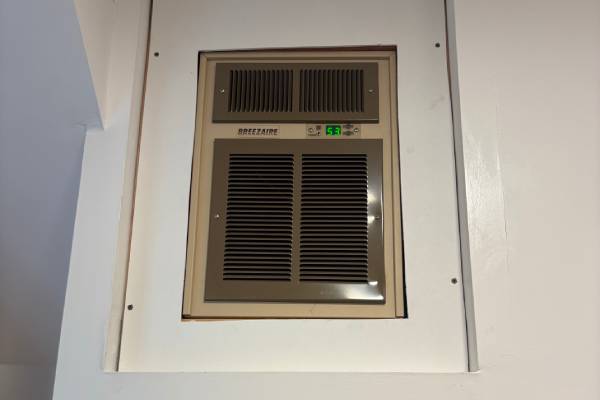
Residential specialty cooling is its own corner of the trade. A wine room cooling unit is a compact refrigeration system built to hold a steady, cool temperature and moderate humidity. It sits in a wall opening and dumps its heat into the room or space behind it. It runs many more hours than a house air conditioner and forgives far less: a blocked exhaust side or a dusty coil shows up quickly as a readout that keeps creeping up. When that happens, or the unit starts short cycling, the cause is usually airflow on the hot side, a failing fan, or a charge problem.
The work runs from small units like that to commercial condensing units for walk-ins and reach-ins at storefronts, offices and restaurants, and property management companies call on us across the coverage area. On refrigeration the method matters more than the brand on the cabinet, and it stays the same from box to box.
Repair or replace, said straight
A tired condensing unit gets an honest read. If a fan motor, a contactor or a good cleaning puts it back in service, that is the recommendation. If the compressor is failing on a unit that has needed constant attention, you see the replacement price beside the repair price and decide.
Send the equipment details with the make and model from the nameplate and the box temperature you are seeing, or call it in.
Refrigeration questions, short answers
Owners and managers ask these most. For anything else the number is 561-339-5729, day or night.
My walk-in is warmer every morning. What should I check?
Start with the door: the gasket, the hinges and whether it closes fully on its own. Then look at the evaporator coil inside for ice. A coil packed with ice or a door that will not seal explains most overnight drift, and both are worth a service call soon.
Can I chip the ice off the evaporator coil myself?
Better not. Tools can puncture the coil and turn a defrost problem into a refrigerant leak. Shutting the system off and letting the ice melt is safer, but the ice came from somewhere: a failed heater, timer, fan or drain, and that still needs finding.
Do you answer refrigeration calls overnight?
Yes. The phone is answered 24/7, because a cooler full of product cannot wait for business hours. If the problem can be narrowed down on the call, it will be, and you hear plainly what the repair should cost before anything gets replaced.
What does refrigeration maintenance actually include?
Condenser and evaporator coils cleaned and inspected, drain lines cleared, door gaskets and hinges checked, fans and defrost parts tested, and box temperatures compared against your log. Unglamorous work, and it is what keeps a cooler from failing on the busiest weekend of the year.
Do you work on wine room cooling units?
Yes. A wine room unit is a small refrigeration system and gets the same diagnosis: airflow on both sides, fan operation, coil condition and charge. Most problems trace back to a blocked exhaust side or a dirty coil, and both are straightforward to put right.
Keep the cold where the product is
Box temperature, time of day and whether the fan is turning. Three details on the phone and the visit starts half-solved.
Get a Straight Price